JointVive is marketed as a nine-ingredient liquid formula. Our ingredient review asks not only what is present, but how directly available research applies to the finished drops and to the joint outcomes the seller promises.

JointVive Joint Comfort Drops (Nutraville)
Product image is displayed for identification. Seller claims and clinical evidence are evaluated separately throughout this site.
View Current Seller OfferOur rule: the strength of a conclusion should not exceed the strength of the evidence supporting it.
Ingredients Disclosed by the Seller
| Ingredient | Best joint-related human evidence we found | Main limitation |
|---|---|---|
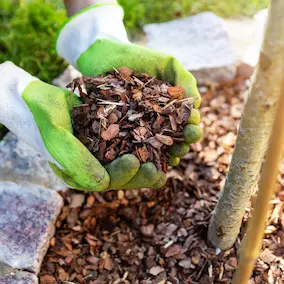
| Pine bark extract | Small osteoarthritis trials; Cochrane review | Low-certainty evidence; often a branded extract |
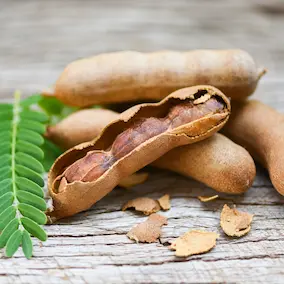
| Tamarind | 56-day knee OA trial of a tamarind–turmeric combination | Not tamarind alone; small, industry-funded |
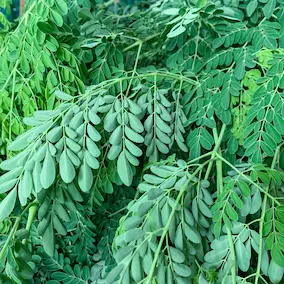
| Moringa | Mostly animal studies | Limited human joint data |
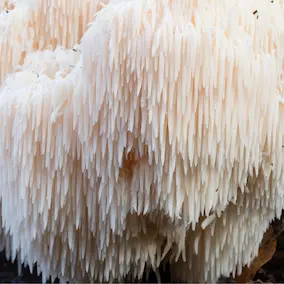
| Lion’s mane mushroom | Animal arthritis studies | No human joint trials identified |
| Ginkgo biloba | Not studied for joints | Bleeding-risk interactions |
| Spirulina, chlorella | Not studied for joints | Contamination risk in poorly made products |
| Bacopa monnieri | Not studied for joints | Known for memory research; GI effects |
| Neem | Not studied for joints | Safety cautions in pregnancy and children |
Why an Ingredient List Is Not an Evidence Score
Nine names tell you what is present, not how much. The sales page does not show a Supplement Facts panel with per-ingredient amounts, and a 2 fl oz liquid dosed in drops may deliver far less of each botanical than the capsules used in trials.
Pine Bark Extract
Pine bark is the most-researched joint ingredient here, mostly as the branded extract Pycnogenol. A 2020 Cochrane review across chronic conditions, including osteoarthritis, found the evidence too small and low-certainty to draw firm conclusions.
Read our pine bark evidence deep dive →
Tamarind
The trial most often cited for JointVive tested 250–300 mg/day of proprietary compositions that combined tamarind seed extract with turmeric (and in one arm, mangosteen) in 90 adults with knee osteoarthritis for 56 days. Results favored the extracts, but the study was small, short and funded by the ingredient companies, and it did not test tamarind on its own.
Moringa and Lion’s Mane
Promotional articles cite animal studies on joint swelling and inflammatory markers. Animal results can generate hypotheses but do not show benefit in people with joint pain.
Ginkgo, Bacopa, Spirulina, Chlorella and Neem
These ingredients are studied mainly for memory, circulation or general nutrition. We did not identify joint-pain trials for them. Some carry safety considerations covered on our side-effects page.
Formula Transparency
We recommend asking the seller for the full Supplement Facts panel, including the amount of each extract per serving, before buying.
Our Conclusion
JointVive has two ingredients with modest joint research, at undisclosed doses, surrounded by ingredients chosen for other purposes. The defensible conclusion is limited ingredient-level plausibility, not proof that the formula relieves joint pain.
Sources & References
We prioritize primary product information, regulatory sources, peer-reviewed research and recognized clinical guidance. Seller claims are not treated as independent clinical evidence.
- Current JointVive seller page (jointvive.com)
- Cochrane review: Pine bark (Pinus spp.) extract for treating chronic disorders, 2020
- Tamarind seed + turmeric extract compositions in knee osteoarthritis: randomized trial, 2022 (PMID 35096104)
- NCCIH: Ginkgo
- NCCIH: Blue-green algae (spirulina)
Related Research
Editorial owner: JointVive Reviews Editorial Team · Last reviewed: November 13, 2026